
Transitions
and growth

We move through jiujitsu as we do in our lives. Forward, backward, sideways, up, and down. We transition between different directions in endless permutations in the act of progressing; of becoming and being something or anything. In the end, whether we accept it or not, the inescapable path that we must all take is to grow — taller, bigger, better, older, wiser, and so on.
Some do it better than others. Some are luckier than others. Some fail, some succeed. Some do it well, some badly. Like a tree that has reached full height, we all go through the growth process until we cannot.
When we roll we start, consciously or otherwise, to look at our chances against our partner, in equal amounts of fear, confidence and excitement. We can start standing or sitting, it does not matter. The first thing we do is engage our partner. To instinctively reach out and get a grip on the fabric of our partner’s gi.
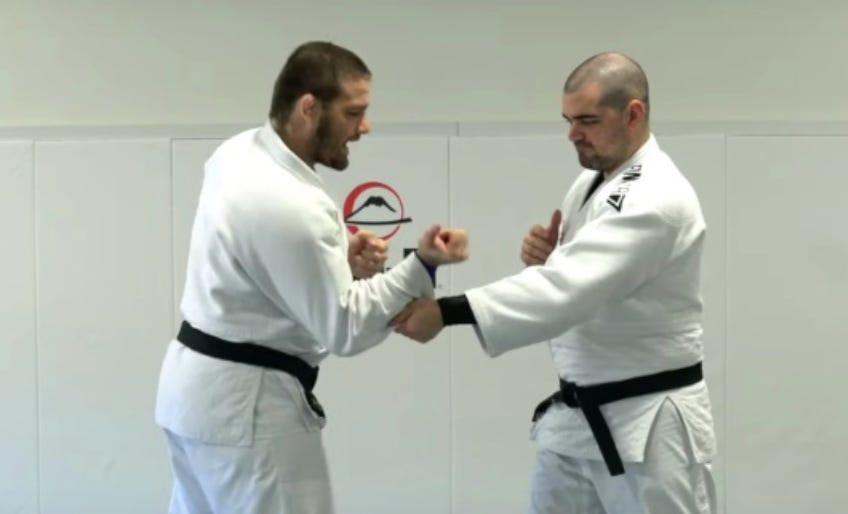
I use Judo grips and they have worked well for my jiujitsu game.
Getting a grip is something that I got better with as I got older. I can say that my superpower is equanimity, or at least the appearance of it. I used this power 20 years ago as I nonchalantly entered the exam room as if it was not the biggest moment of my life at the time, my poker face masking my nervousness. Just a day before a friend told me that when you get into the room for the Bar exams look at everyone and tell yourself that you are better than 75% of them. The trick is to look confident then feeling confident follows. Just imagine that you’re better than most, then you’ll start feeling the same. I did as he suggested, and to this day I recognize that it’s a big reason I passed. I still fondly share it with Bar candidates and call it the 75% rule.
75%. This number has taken on a different meaning for me. This is now my level of effort in most days during training, as I reserve my strength to get at least 5 rolls in. For instance, I avoid fighting standing up because I know that it will take a lot out of me. After all, I am no wrestler. So using my collar grip to disrupt my partner’s posture, I always pull guard. As I go down, one foot automatically looks to entangle my partner’s leg, while the other looks for a post, which can be my partner’s leg, hip, thigh or arm. Once my feet are in position, I place them on firmly.
Firm has a different meaning for my line of work. It usually references working for a Law Firm. One of the few viable employment options when I was a young lawyer. Nowadays, young lawyers have it easy, as older guys are wont to think and say, with more employment options and higher starting salaries. But I have no regrets. Working for 3 law firms before going solo was a good career investment for me. The years spent taking in the experience, learning the ropes, burning the midnight candle, and taking little to no breaks in all the first 10 years of my 20-year legal practice has and still pays dividends. Incidentally, I have always thought it funny that in my profession working is called practice. As one of my co-workers astutely asked, practice for what? To which I responded with another question, when do we get to do real lawyering?
Practice in jiujitsu, on the other hand, is the real thing. The way we train is the way we fight. I have practiced the guard pull to dela Riva countless times. I developed my game around it, and used this guard as springboard for my favorite sweeps and submissions. Over the years my entry into these sweeps and submissions have become more efficient and simpler. They have become very effective for me, albeit lacking anything fancy. No frills, no thrills (check out my article on “Talk” for a discussion on why jiujitsu is unique, in that what we do in the gym will be the same with what we might do in a self-defense situation.).1
Fancy might be a word most non-lawyers will use to describe the law practice. If this word means trading in things that only lawyers understand and which few can relate to, then it probably is. Our profession has generally kept its glamour and prestige but at a high price. So I try to steer clear of fancy, glamour or prestige. But I did bring my wife to fancy dinners once or twice in our 25+ years. I remember our first fancy dinner was in a place called Vieux Chalet, a Swiss restaurant in Antipolo with a view of the mountains. I think we had the 6-course meal and some wine. We enjoyed the place, especially the exclusive feel, since not too many people were there at the time. The menu prices, though, were staring down at my young lawyer’s salary as if saying “you sure about this?”. But my wife and I loved to eat when we were younger, and most of our important conversations — good or bad, happy or sad — were done over the dining table. So I ignored the price and took a hit. It was actually the first time for me to eat a meal served in courses, as fancy dinners were not a thing when I was growing up. In contrast to the curated preparation and timing of course meals, every celebration in my family was a smorgasbord.

You have to visit this place when you’re in Antipolo. Still one of our favorites.
I don’t have a smorgasbord of submissions. My favorites from dela Riva would be either an armbar or shoulder lock. The simplicity of these techniques betray their effectivity. I have effectively used them on beginners and advanced players alike all throughout training in jiujitsu. But since they are common my partners are not usually surprised when I attempt them. In order to counter, I expect my partner to start breaking my grips and deny me control. So my hands always look for strategic holds. For example as one grips my partner’s pants at the bottom hem, the other hand immediately looks for the sleeve or the belt. I usually kick my partner’s thigh back, and pull his sleeve towards me. This removes his base and posting arm and causes him to fall. A sweep worth 2 points in most BJJ rule sets.
Rules. Along with laws, rules make up the constitution of a lawyer. It can be said that lawyers are creatures of the law and rules. We memorize, live and breath them, so that we can use them to work for us and the clients we represent. A lawyer who has mastered the letter and meaning of the law and rules is deemed a genius in our profession, at par with great scientists, builders and artists. However, our use of the law and the rules have alienated us from the general population. And it doesn’t help that many consider that lawyers’ contributions to the improvement of human life do not measure to the same level as other humanist traditions. Anyway, lest I misrepresent myself, I love being a lawyer. There have been many who embody our best traditions — those who have transcended rules, and fought for what is right. But for now we will have to accept that a big part of lawyering, and being a stereotypical good lawyer, is playing the rules game and playing it well.
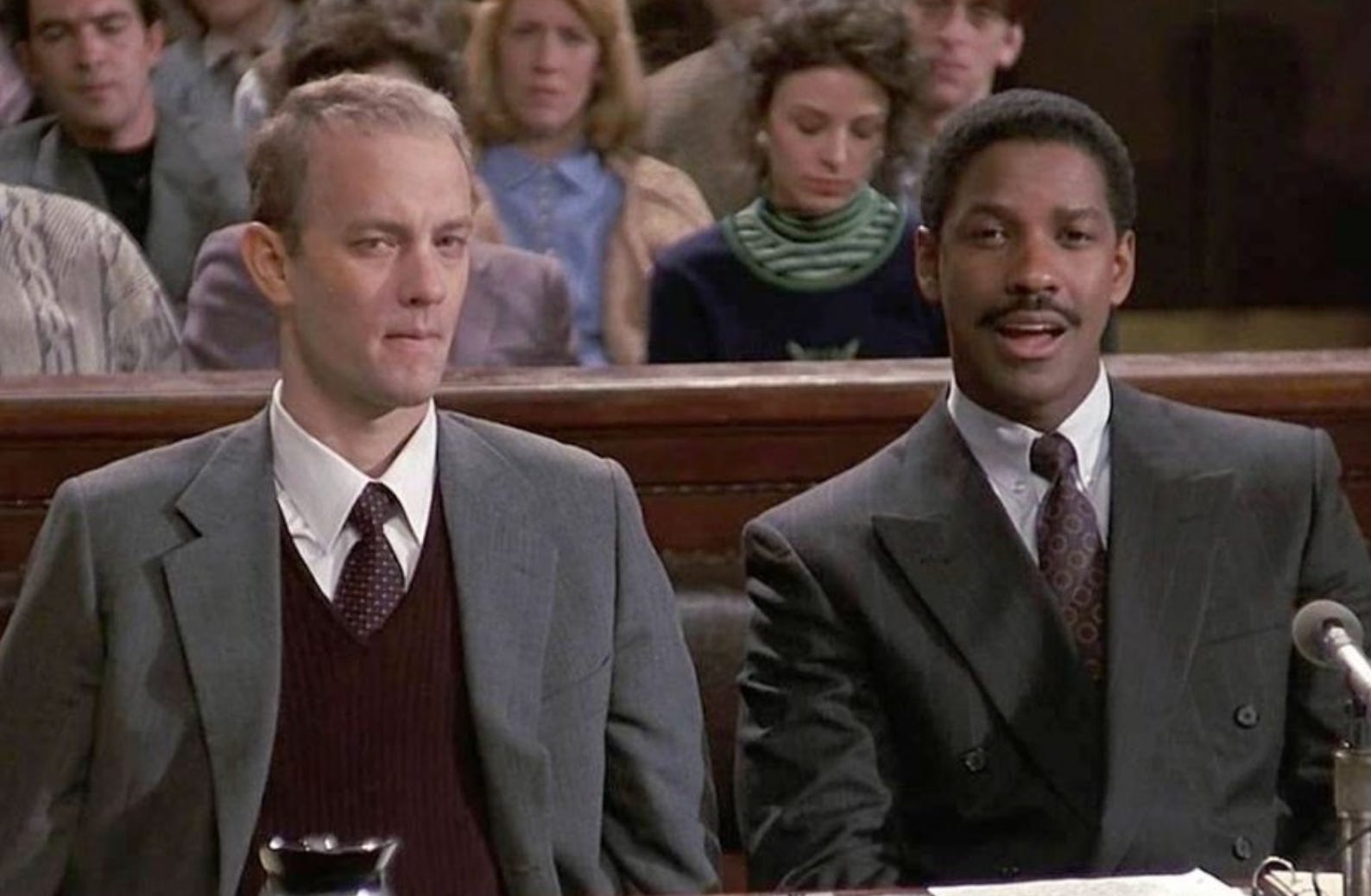
Tom Hanks and Denzel Washington star as lawyers Andrew Beckett and Joe Miller in the movie Philadelphia. In a scene in this movie, Andrew asked “what do you call a thousand lawyers chained together at the bottom of the ocean?”, to which the answer was “A good start”.
Jiujitsu is a game and nothing more. At the same time jiujitsu is more than a game, much more. At its most basic, it is an avenue where you can develop yourself mentally and physically. At its absolute best, it is an avenue for an expression of the real you, a means to peel away the layers of protection put up by the ego to expose and free the real self. I do not want to make it more than it is, but jiujitsu has transformed more lives for the better than it cares to or intended. And chances are that the real you will reveal itself in your jiujitsu. Probably the biggest compliment I ever got for my jiujitsu was from my late friend Dennis, a fellow practitioner, and I will remember his words forever with fondness. He said that I keep the standards of the gym high, that I am a “gatekeeper”. He meant that you have to test yourself against me to know if you’re ready to move up in your journey.
Gatekeeper, I like the sound of that. Lawyers have also been called sentinels, and lawyering as the new priesthood. As such, lawyers measure your actions against the law and make your passage through the labyrinth of laws possible. Without a lawyer, you would have to scale the gate at your own peril. However, in reality, rather than the romantic picture of lawyers solemnly standing by the gate, dispensing wise counsel to every passerby, lawyer work is closer to that of a toureiro, a bullfighter. There is so much unaddressed legal concerns because of the general population’s alienation from the law, and the stringent requirements of becoming a lawyer. In the Philippines, there is 1 lawyer for every 2,500 Filipinos.2 That is enough to gobble up 4 lawyer lifetimes. So realistically, instead of holding keys to the proverbial legal gate, Philippine lawyers hold a muleta, a red banner, waiting for the next toreando to parry.
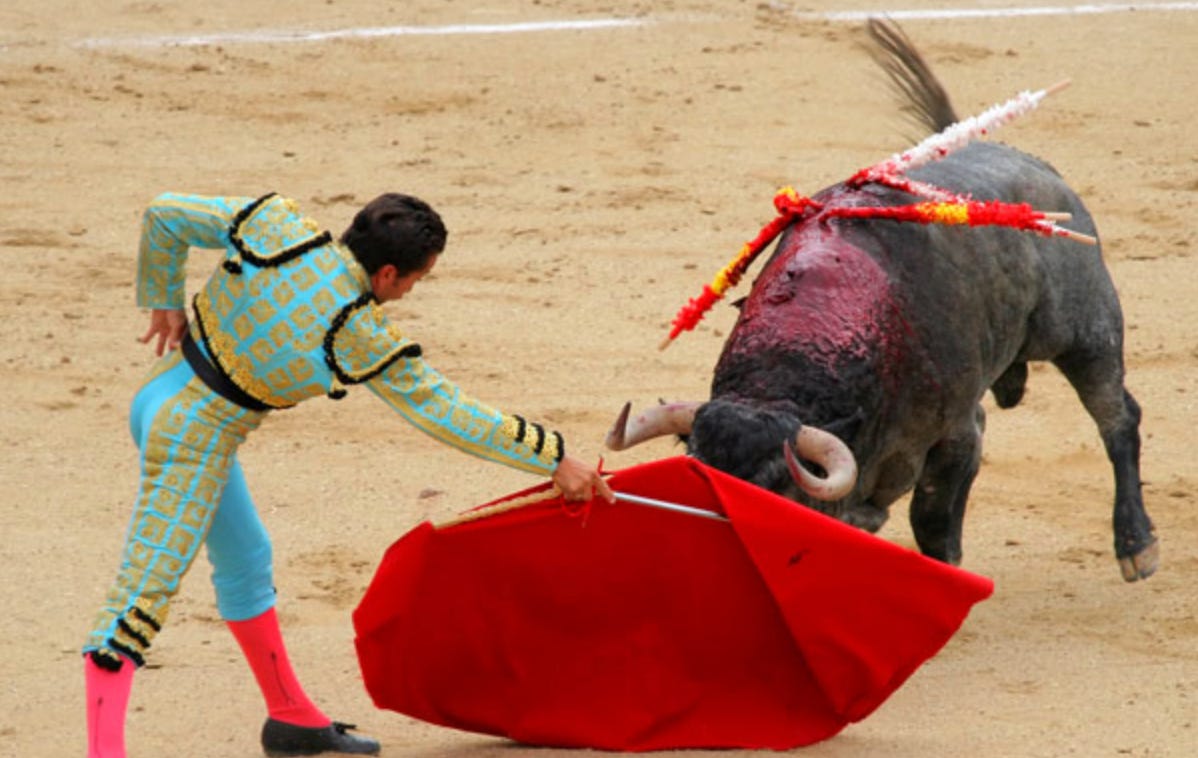
Lawyers are like bullfighters, only less elegant and face more occupational hazards. CTTO.
The toreando pass, if done properly, is very hard to resist, especially for someone who has short legs, like me. I have to fight to keep my partner’s posture broken or weak, and constantly disrupt his balance and his base. Otherwise, he passes my guard straight to side control, knee ride or mount. From any of these positions, submission is not too far away.
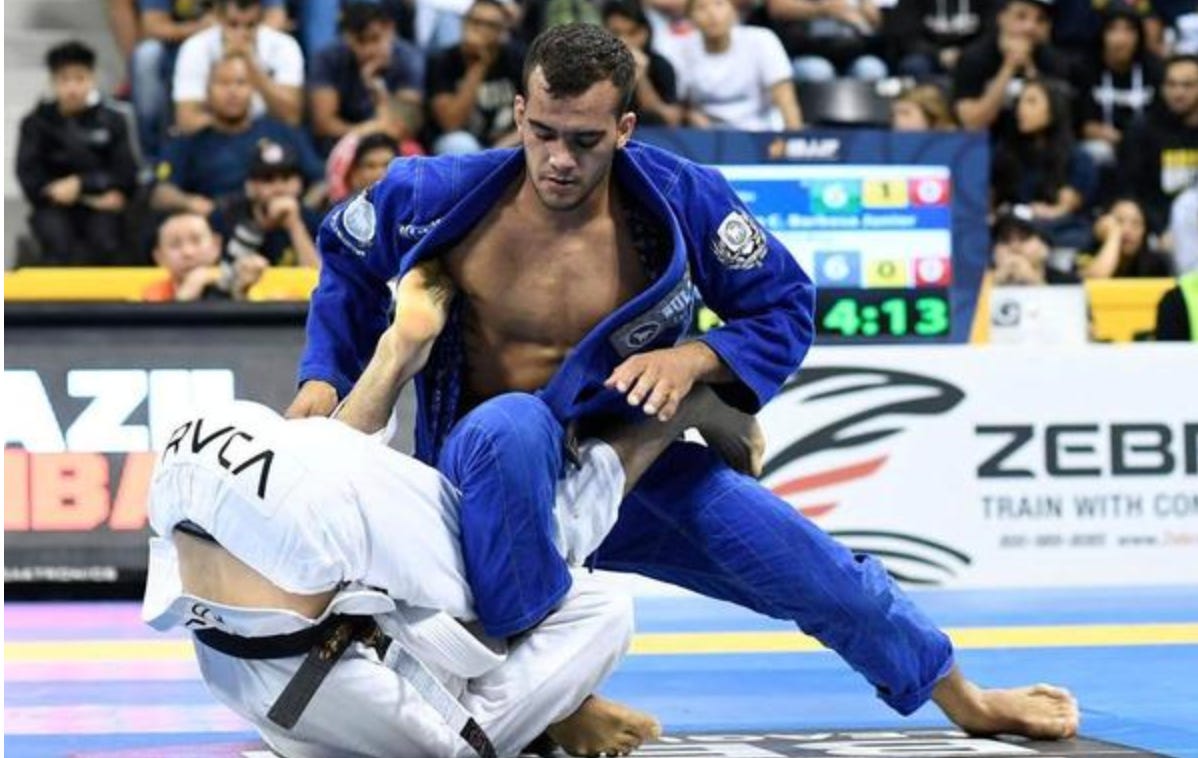
Marcio Andre. My former coach once called him one of the best forward passers of the modern era. I picked up some of my favorite passing routines from him. CTTO.
“I submit, your honor”. I would nowadays tell this to the judge to get the process moving forward. I will no longer press a point to sound smart, or even to be right. Nowadays, it is not as important for me to be right, at the expense of delaying a case, taking care to avoid getting intoxicated on meaningless wins at the expense of genuine victory. Once, I engaged in a heated argument with an opposing counsel on — in retrospect — a silly point. The animosity between us carried on even outside the courtroom where he ended up landing a punch on my chest. My instinct was to hit back. But you don’t do that to a septuagenarian. Anyway, to be sure, these days I will not even get to that point where I would have to hate the other lawyer. I choose my battles now. I have transitioned from that young and stupid lawyer who would do otherwise.
Transitions — all jiujitsu coaches preach this, me maybe more than others. It’s important to be ready and able to move from one position to the next. To abandon a bad position and not insist on a losing form. However, transitioning to a dominant position is not easy in the modern jiujitsu game.
There is simply so much talent and creativity now among young practitioners. This makes a pass look more spectacular now especially against a highly technical guard player, a label I used to identify with. But I can no longer claim that as my guard now gets passed by lower belts. Not routinely, but it has happened and will continue to happen by my estimation.
This is true when rolling with my older students, especially those who are competing this weekend. I am proud of them, and confident that they will do well. So when they pass my guard after all that effort — I do not make it easy for them or anyone — I acknowledge the technical beauty of the pass. I mentally nod in approval as, I am happy to admit, my disposition is now far from the winner-take-all attitude of my white belt days.
In all of these, I can say that I have grown in both my profession and in my jiujitsu. And I will continue in my transition of growth for better or worst, until I cannot.
Based on 2016 data.